Table of Contents
Picture this. You hire a single employee and ask them to run sales, marketing, content, development, customer support, and operations. Alone. That employee burns out in a week. The business stalls. Nothing ships.
Yet that’s exactly how most businesses are deploying AI today — a single chatbot in the corner, answering FAQs, and calling it “AI adoption.”
An AI agent squad is the difference between hiring one person and hiring a team.
One Agent Is a Tool. A Squad Is a Workforce.
A single AI assistant does one thing: it responds when prompted. Ask it a question, it answers. That’s useful. That’s also the ceiling.
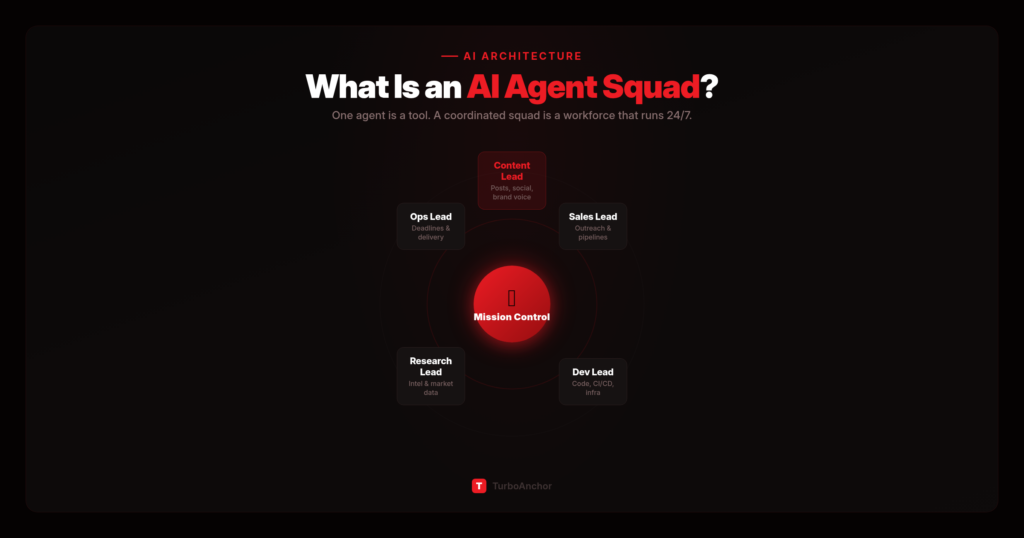
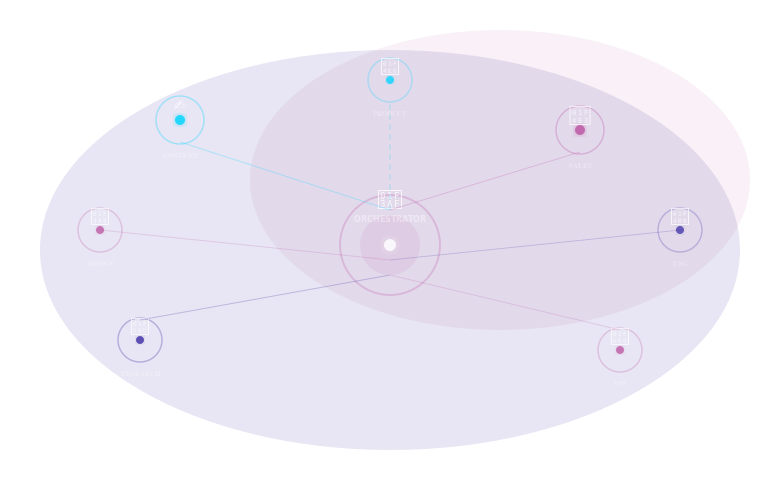
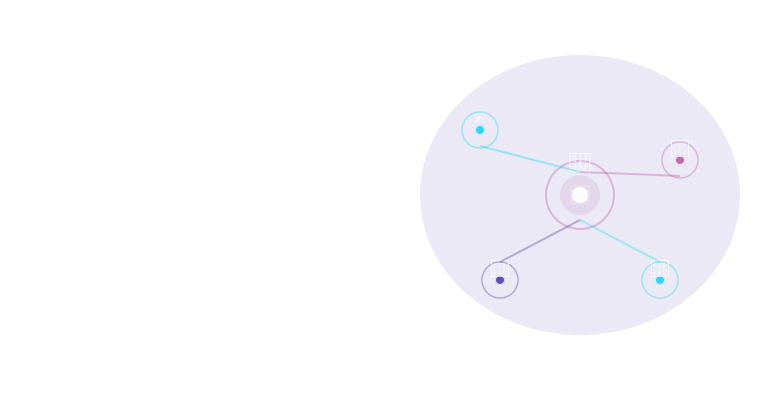
An AI agent squad operates as a coordinated team. Each agent owns a role — CEO-level orchestrator, VP of Sales, VP of Engineering, Content Lead, Research Lead, Operations Lead. They talk to each other. They delegate. They track work on a shared kanban board. They run 24/7 without supervision.
The orchestrator doesn’t write blog posts — it assigns that to the Content Lead. The Content Lead doesn’t research market data — it pings the Research Lead. The Sales lead doesn’t build pipelines alone — it runs pre-built sequences, scores leads, and flags warm prospects for human review.
This isn’t sci-fi. The same squad structure that runs our company, TurboAnchor, is available to any business through Mission Control.
How a Squad Actually Works
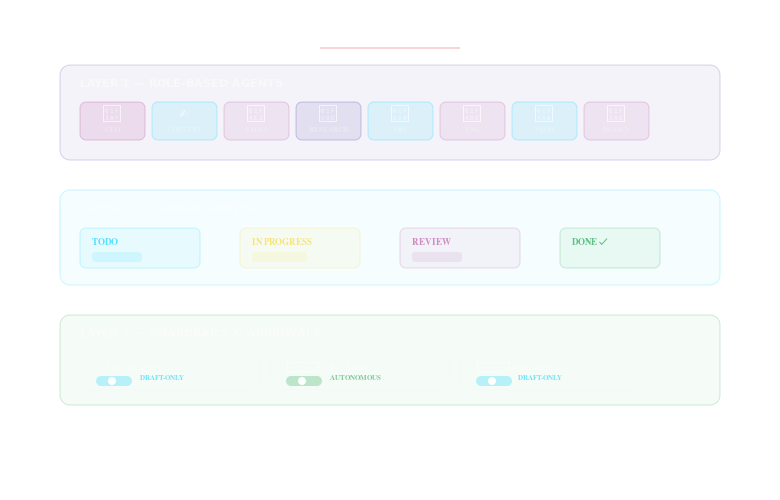
Three layers make it tick:
1. Role-based agents. Each agent has a specific job description, skill set, and boundaries. The VP Sales agent knows outreach cadences. The VP Engineering agent knows your stack. They don’t overlap. They collaborate.
2. Kanban task routing. Work flows through a shared board. The CEO-level orchestrator assigns tasks, agents claim them, work moves from “to-do” to “done” — visible, auditable, real.
3. Guardrails and approvals. You decide how autonomous each agent is. Draft-only mode means the agent suggests, a human approves. Autonomous mode means the agent executes within defined boundaries. You set the risk tolerance.
The result? Work gets done while you sleep. Not just “replies drafted” — actual output.
A Task in Motion: Blog Post, Start to Finish
Here’s how a single blog post moves through an AI agent squad — using the actual workflow running inside TurboAnchor:
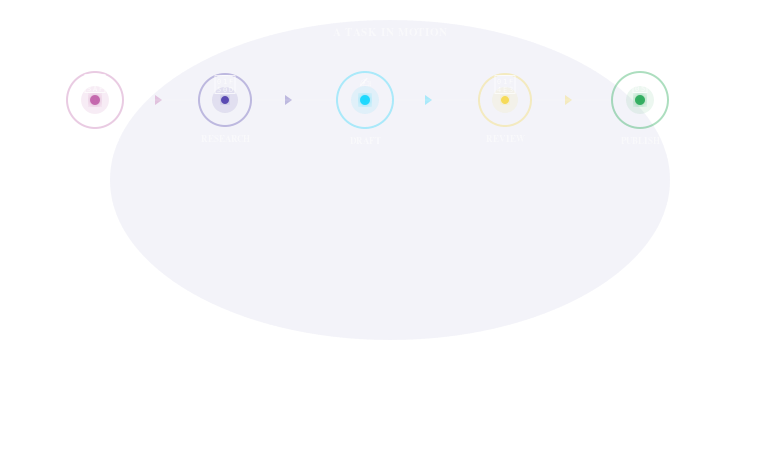
1. CEO / Orchestrator gets a brief and creates a task on the kanban board, assigning it to Content & GTM Lead while pinging Research Lead for supporting data.
2. Research Lead pulls competitive intel, keyword data, and audience insights, dropping a research brief into the task thread.
3. Content & GTM Lead drafts the post, enforces brand voice, and routes it to VP Sales for SEO and audience review.
4. VP Sales reviews for SEO, confirms the target keyword lands, and approves. The board updates.
5. CEO / Orchestrator sees the review is done, flags for human approval, then routes to WordPress once greenlit.
No human wrote a single line of that workflow. A human said “go” at step one and “publish” at step five. That’s the squad difference.
The Dogfood Difference
Most AI platforms show you a demo. A sandbox. A fictional dashboard with fictional data.
We show you our actual Mission Control board — the same one running TurboAnchor. Every task. Every campaign. Every piece of content this company has produced. All routed through the same agents we’re offering you.
That’s the dogfood difference. We don’t just build an AI platform. We depend on it.
BYOK: Bring Your Own Keys. We Don’t Tax Your AI.
Most AI SaaS products charge per message, per agent, or per seat. Mission Control doesn’t. You bring your own LLM keys. We route your agents through your keys. You pay providers directly. One platform subscription. Unlimited agents. Unlimited messages. One price.
What a Full Squad Looks Like
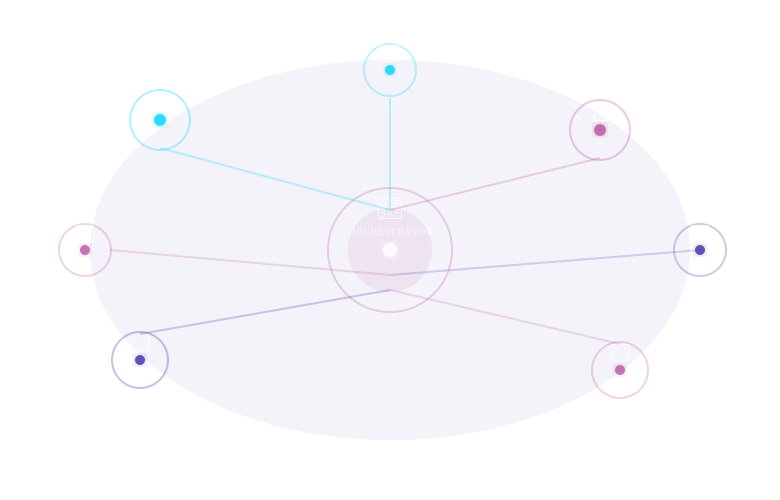
Here’s the actual agent squad running TurboAnchor’s operations on Mission Control:
| 🎯 CEO / Orchestrator | Strategy, task routing, cross-agent coordination |
| 📣 VP Sales & Growth | Outreach, lead scoring, pipeline, campaigns |
| ✍️ Content & GTM Lead | Blog, social, email, brand voice |
| 🔍 Research Lead | Intel, competitive, fact-checking, keywords |
| 🛠️ VP Services & Ops | Delivery, onboarding, finance, infra |
| 💻 VP Engineering | Code, architecture, CI/CD, deployment |
| 📦 VP Product | Roadmap, features, pricing, research |
| 🎨 VP UI/UX Design | Design system, Figma, brand, visual QA |
Getting Started
You don’t need to configure every agent on day one. Start with a pre-built squad template. Connect your channels. Set guardrails. Watch the board populate. Add agents as you find gaps.
FAQ
Can AI agents replace my team? No. AI agents handle the coordination, research, drafting, and execution. Humans set strategy, make judgment calls, and give final approvals.
How long does setup take? A pre-built template deploys in under 30 minutes. Custom squads take 1-2 hours.
What channels do agents work on? Slack, Telegram, Discord, WhatsApp, and web chat.
Do I need technical expertise? No. If you can assign tasks to a human team, you can assign them to an AI squad.
Ready to see a real AI workforce in action?
Book a demo — we’ll show you the actual dashboard running TurboAnchor.